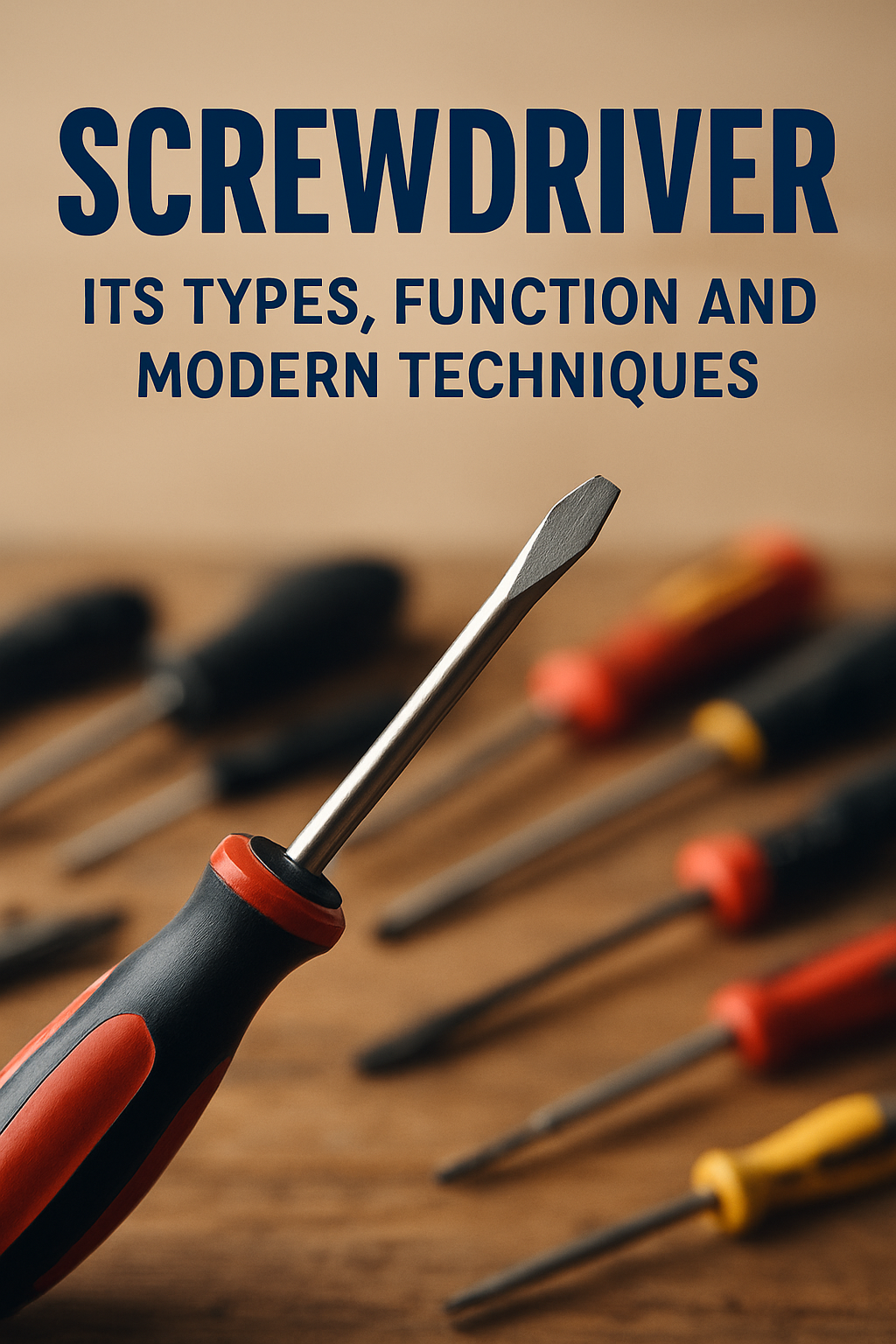
SCREWDRIVER THE ERA
Screwdrivers remain one of the most essential tools across industries—from construction and manufacturing to household maintenance. Over the years, traditional designs have evolved with modern innovations to enhance precision, efficiency, and user safety.
Types of Screwdrivers
1. Flathead (Slotted)
One of the earliest screwdriver forms, used for screws with a single straight slot.
2. Phillips
Designed with a cross-shaped tip, offering better grip and torque.
3. Torx
Features a six-point star-shaped pattern, allowing higher torque without cam-out.
4. Hex (Allen)
Commonly used in furniture, machinery, and bicycles, designed for hexagonal sockets.
5. Multi-bit / Interchangeable
A modern, versatile type with replaceable bits to tackle different screw heads.
Functions
- Fastening and Unfastening Screws: The primary use across industries.
- Precision Work: Miniature screwdrivers support electronics and fine mechanical tasks.
- Applied Torque Management: Modern screwdrivers use mechanical or electric assistance.
Modern Techniques and Innovations
1. Electric and Cordless Screwdrivers
Battery-powered tools allow higher speed and efficiency, suitable for repetitive tasks.
2. Magnetic Tips
Help secure the screw in place, improving ease of use in tight spaces.
3. Ergonomic Handles
Enhanced grip reduces user fatigue and prevents accidental slips.
4. Smart Screwdrivers
Advanced versions track torque, provide real-time feedback, and connect to mobile apps.
The screwdriver continues to evolve, blending traditional craftsmanship with modern technology. Its versatility and indispensable role ensure its place as a foundational tool across multiple industries.

Related Posts

US Vice President Vance in India for tough talks on trade

An error occurred. dar